
How to Use a Video Poker Strategy Chart Without Slowing Down Your Game

A video poker strategy chart is a learning aid, not a lucky object. It ranks possible holds for one specific game and pay schedule so a player can make consistent decisions. The useful way to use one is to study its structure before the visit, keep the live reference simple, and accept that checking a close hand is more important than racing the person at the next seat.
For article 3 in this campaign, the reader’s job is to make a practical choice for an adult visit in or near East Las Vegas. This article does not promise a game result, advertise a temporary promotion, or guarantee a particular item, machine, broadcast, or event. Use the linked first-party pages when a current detail will determine the plan.
Match the chart to the game
A beautifully organized chart is still wrong when it was built for another variant. The point is not to make the evening complicated; it is to decide the few details that prevent confusion later.
- Exact name: Confirm whether the screen is Jacks or Better, Deuces Wild, or another family.
- Pay schedule: Look for the table assumptions printed with the reference.
- Wager condition: Notice whether any recommendation depends on a particular credit level.
- Fresh check: Reconfirm after changing games on a multi-game machine.
A useful way to remember match the chart to the game is to ask four short questions: What does exact name tell us? How does pay schedule change the choice? Has wager condition been confirmed? Does fresh check still fit the evening? Clear answers are more valuable than a rushed decision.
While working through “Match the chart to the game,” use Starboard Tack’s gaming and video poker page as the first-party checkpoint. That page helps verify the part of this specific decision that can change instead of leaving the group dependent on an old search result.
Learn how the priority list works
Most charts rank hand types from strongest hold to weakest, which turns a complicated hand into a scanning task. The point is not to make the evening complicated; it is to decide the few details that prevent confusion later.
- Top-down search: Begin at the top and stop at the first description that fits the cards.
- Made hand: Identify whether the deal already contains a paying hand.
- Draw: Look for four-card and three-card possibilities only after stronger holds are ruled out.
- Single cards: High-card options usually sit lower because fewer helpful draws remain.
The order matters: start with top-down search, use made hand to narrow the choice, verify draw in the real setting, and keep single cards as the final guardrail. That sequence turns learn how the priority list works into a decision the whole group can understand.
While working through “Learn how the priority list works,” use Starboard Tack’s Jacks or Better guide as the first-party checkpoint. That page helps verify the part of this specific decision that can change instead of leaving the group dependent on an old search result.
Practice pattern recognition away from the bar
The chart becomes faster when common shapes are familiar before money and social distractions enter the picture. The point is not to make the evening complicated; it is to decide the few details that prevent confusion later.
- Ten-hand drill: Deal or use a free practice tool and classify ten hands without rushing.
- Say the pattern: Name “four to a flush” or “low pair” before checking the answer.
- Review misses: Write down only the patterns that repeatedly cause confusion.
- One variant: Do not alternate game families during the first practice session.
These four checks work together rather than as separate rules. Ten-hand drill establishes the baseline, Say the pattern adds context, Review misses prevents an avoidable assumption, and One variant keeps the plan practical. If one check fails, revise the plan before moving on.
While working through “Practice pattern recognition away from the bar,” use Starboard Tack’s video poker pay-table guide as the first-party checkpoint. That page helps verify the part of this specific decision that can change instead of leaving the group dependent on an old search result.
Use a compact live reference
A small, readable reference is less disruptive than searching several tabs or scrolling a long article. The point is not to make the evening complicated; it is to decide the few details that prevent confusion later.
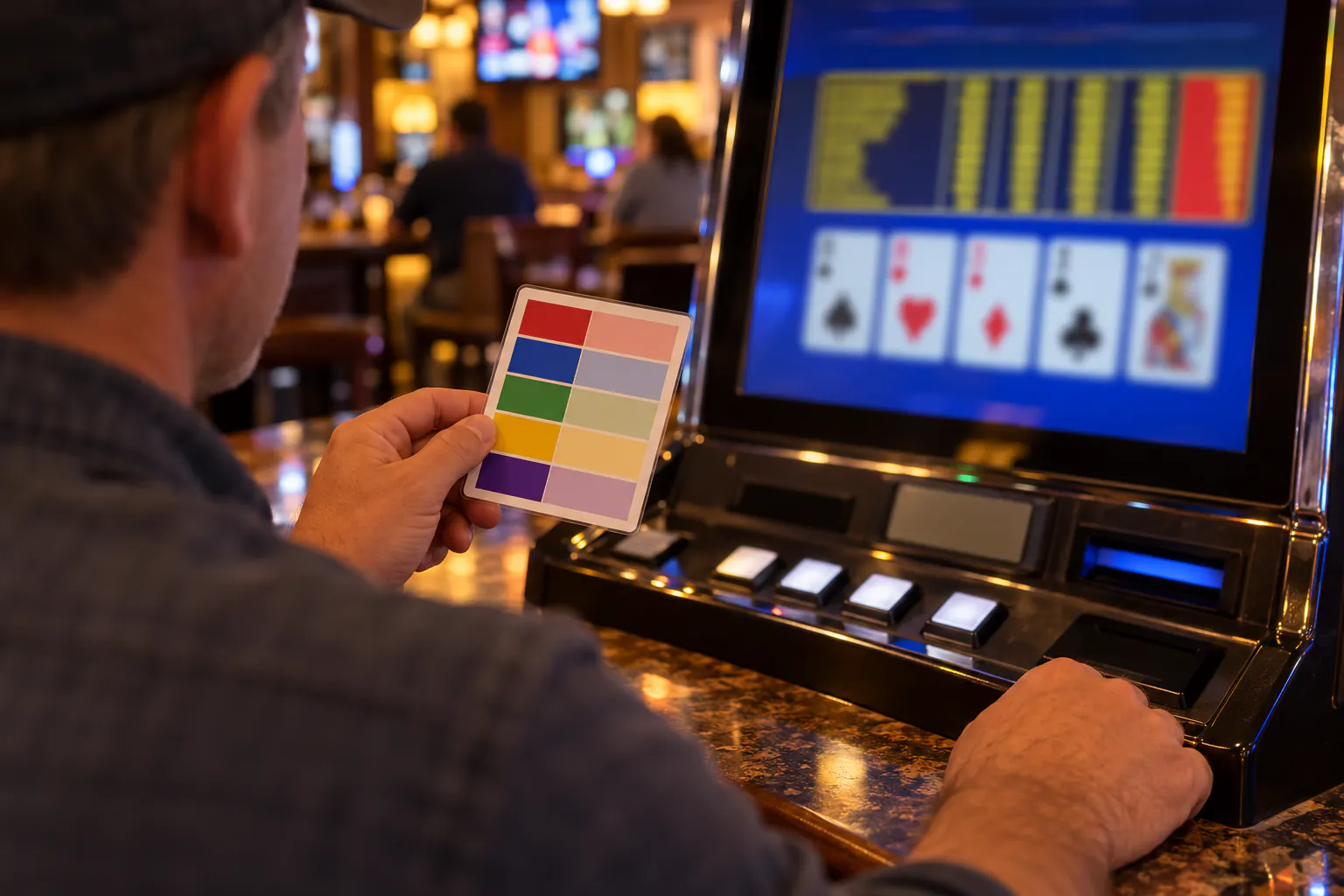
- Legibility: Choose type that can be read without zooming at the machine.
- No clutter: Keep only the priority list needed for the selected game.
- Position: Hold the reference without blocking controls, neighboring guests, or staff.
- Permission: Follow house rules about devices and printed aids.
A useful way to remember use a compact live reference is to ask four short questions: What does legibility tell us? How does no clutter change the choice? Has position been confirmed? Does permission still fit the evening? Clear answers are more valuable than a rushed decision.
While working through “Use a compact live reference,” use Starboard Tack’s responsible gambling guide as the first-party checkpoint. That page helps verify the part of this specific decision that can change instead of leaving the group dependent on an old search result.
Handle close decisions calmly
The chart is most valuable when two plausible holds compete for attention. The point is not to make the evening complicated; it is to decide the few details that prevent confusion later.
- Pause: Let the current hand stay on screen while confirming the pattern.
- Compare wording: Read suit, rank, and gap conditions carefully.
- Avoid memory battles: Use the reference rather than arguing with a half-remembered rule.
- Resume deliberately: Make the hold once, then move on without replaying the choice emotionally.
The order matters: start with pause, use compare wording to narrow the choice, verify avoid memory battles in the real setting, and keep resume deliberately as the final guardrail. That sequence turns handle close decisions calmly into a decision the whole group can understand.
While working through “Handle close decisions calmly,” use Starboard Tack’s contact and location details as the first-party checkpoint. That page helps verify the part of this specific decision that can change instead of leaving the group dependent on an old search result.
Keep the table from controlling the pace
Accurate use does not require instant play, and entertainment should not feel like a speed test. The point is not to make the evening complicated; it is to decide the few details that prevent confusion later.
- Comfortable rhythm: Leave enough time to see all five cards before touching hold buttons.
- Breaks: Step away when concentration slips or every hand starts to look alike.
- Alcohol awareness: Recognize that drinking can reduce attention and judgment.
- Stop point: End at the planned time even if the final hand was confusing.
These four checks work together rather than as separate rules. Comfortable rhythm establishes the baseline, Breaks adds context, Alcohol awareness prevents an avoidable assumption, and Stop point keeps the plan practical. If one check fails, revise the plan before moving on.
Know what the chart cannot do
A reference can improve consistency, but it does not predict the draw or guarantee a positive session. The point is not to make the evening complicated; it is to decide the few details that prevent confusion later.
- No forecast: The next cards remain random.
- No repair: A correct hold cannot erase earlier losses.
- No venue claim: The chart says nothing about which games are currently available at a location.
- Useful role: Treat it as a way to learn rules and reduce avoidable decision errors.
A useful way to remember know what the chart cannot do is to ask four short questions: What does no forecast tell us? How does no repair change the choice? Has no venue claim been confirmed? Does useful role still fit the evening? Clear answers are more valuable than a rushed decision.
Putting the plan into practice at Starboard Tack
For “how to use a video poker strategy chart without slowing down your game,” the local reference point is Starboard Tack at 2601 Atlantic St. in East Las Vegas. The official site describes food, rum and cocktails, bar-top video poker, deck shuffleboard, and events. Use only the parts relevant to this article, then match them to the current menu, hours, activity details, and the needs of the actual group.
Before using this video poker plan, share the destination and identify the one fact that still needs confirmation for informational. Leave room for a late arrival, changed appetite, occupied activity area, or quieter pace. That flexibility is what makes the advice in “How to Use a Video Poker Strategy Chart Without Slowing Down Your Game” usable outside a spreadsheet.
As a final check, explain the plan in one sentence without relying on the phrase “how to use a video poker strategy chart.” If the sentence still tells the group what to expect, when to arrive, and what must be verified, the plan is probably specific enough to use. If it turns into a claim about being the best, winning, guaranteed availability, or a temporary special, return to the official pages and revise it.
The responsible close for video poker is simple: adults who drink or play video poker should set limits first, include food and water, and arrange safe transportation. Gambling remains entertainment rather than a way to guarantee income or recover losses. When the preset money, time, attention, or transportation limit for “How to Use a Video Poker Strategy Chart Without Slowing Down Your Game” is reached, stop.