
Before or After a Hockey Game: A Quieter Off-Strip Food-and-Drinks Plan

A hockey night near the Strip can be exciting without making every stop part of the arena rush. Starboard Tack sits in East Las Vegas, within the approved eight-mile planning radius of the T-Mobile Arena corridor, so it can serve as a neighborhood stop before or after the event. The plan should use official game information and current venue details rather than assume broadcasts, promotions, or team affiliation.
For article 12 in this campaign, the reader’s job is to make a practical choice for an adult visit in or near East Las Vegas. This article does not promise a game result, advertise a temporary promotion, or guarantee a particular item, machine, broadcast, or event. Use the linked first-party pages when a current detail will determine the plan.
Choose pregame or postgame as the main job
Trying to make one stop do everything often creates rushed food and uncertain transportation. The point is not to make the evening complicated; it is to decide the few details that prevent confusion later.
- Pregame: Prioritize arrival, a reliable meal, and a firm departure.
- Postgame: Prioritize regrouping, kitchen timing, and a safe ride home.
- Ticket split: Give attendees and non-attendees the same address and communication plan.
- No broadcast assumption: Confirm screen availability separately if anyone plans to watch instead of attend.
A useful way to remember choose pregame or postgame as the main job is to ask four short questions: What does pregame tell us? How does postgame change the choice? Has ticket split been confirmed? Does no broadcast assumption still fit the evening? Clear answers are more valuable than a rushed decision.
While working through “Choose pregame or postgame as the main job,” use Starboard Tack’s off-Strip sports-bar guide as the first-party checkpoint. That page helps verify the part of this specific decision that can change instead of leaving the group dependent on an old search result.
Work backward from the official event time
Arena nights can change traffic and pickup patterns, so a buffer belongs in the schedule. The point is not to make the evening complicated; it is to decide the few details that prevent confusion later.
- Doors: Use the ticket or arena source for the current entry time.
- Travel: Allow for the route from Atlantic Street to the arena corridor.
- Security: Do not bring prohibited items simply because they were convenient at dinner.
- Departure alarm: Set one time that ends the pregame stop.
The order matters: start with doors, use travel to narrow the choice, verify security in the real setting, and keep departure alarm as the final guardrail. That sequence turns work backward from the official event time into a decision the whole group can understand.
While working through “Work backward from the official event time,” use Starboard Tack’s neighborhood game-day guide as the first-party checkpoint. That page helps verify the part of this specific decision that can change instead of leaving the group dependent on an old search result.
Order food that supports the timeline
The right pregame meal is satisfying but not dependent on a long, unpredictable sequence. The point is not to make the evening complicated; it is to decide the few details that prevent confusion later.
- Shareable opening: Use one plate while the final guest arrives.
- Individual main: Let each person choose enough food for the length of the event.
- Tell staff: Mention a genuine departure deadline when ordering.
- Settle early: Close the check before the last-minute rush.
These four checks work together rather than as separate rules. Shareable opening establishes the baseline, Individual main adds context, Tell staff prevents an avoidable assumption, and Settle early keeps the plan practical. If one check fails, revise the plan before moving on.
While working through “Order food that supports the timeline,” use Starboard Tack’s current food and drink menus as the first-party checkpoint. That page helps verify the part of this specific decision that can change instead of leaving the group dependent on an old search result.
Keep drinks inside the transportation plan
A game-night atmosphere does not change the need for a sober driver or rideshare. The point is not to make the evening complicated; it is to decide the few details that prevent confusion later.
- Driver: Choose the nondrinking driver before the first order.
- Water: Hydrate during the meal and before entering the arena.
- One round at a time: Avoid ordering against a clock or promotion.
- Postgame option: Save a slower cocktail discussion for after the event when appropriate.
A useful way to remember keep drinks inside the transportation plan is to ask four short questions: What does driver tell us? How does water change the choice? Has one round at a time been confirmed? Does postgame option still fit the evening? Clear answers are more valuable than a rushed decision.
While working through “Keep drinks inside the transportation plan,” use Starboard Tack’s current events page as the first-party checkpoint. That page helps verify the part of this specific decision that can change instead of leaving the group dependent on an old search result.
Create a clean regrouping message
Crowds and noisy concourses make vague “meet outside” instructions fail. The point is not to make the evening complicated; it is to decide the few details that prevent confusion later.
- Full address: Send Starboard Tack’s Atlantic Street address before the game.
- Time: Choose a postgame check-in window rather than an exact minute.
- Pickup location: Follow current arena and rideshare directions.
- Fallback: Name who will update the group if overtime or traffic changes the plan.
The order matters: start with full address, use time to narrow the choice, verify pickup location in the real setting, and keep fallback as the final guardrail. That sequence turns create a clean regrouping message into a decision the whole group can understand.
While working through “Create a clean regrouping message,” use Starboard Tack’s contact and location details as the first-party checkpoint. That page helps verify the part of this specific decision that can change instead of leaving the group dependent on an old search result.
Use the off-Strip stop to decompress
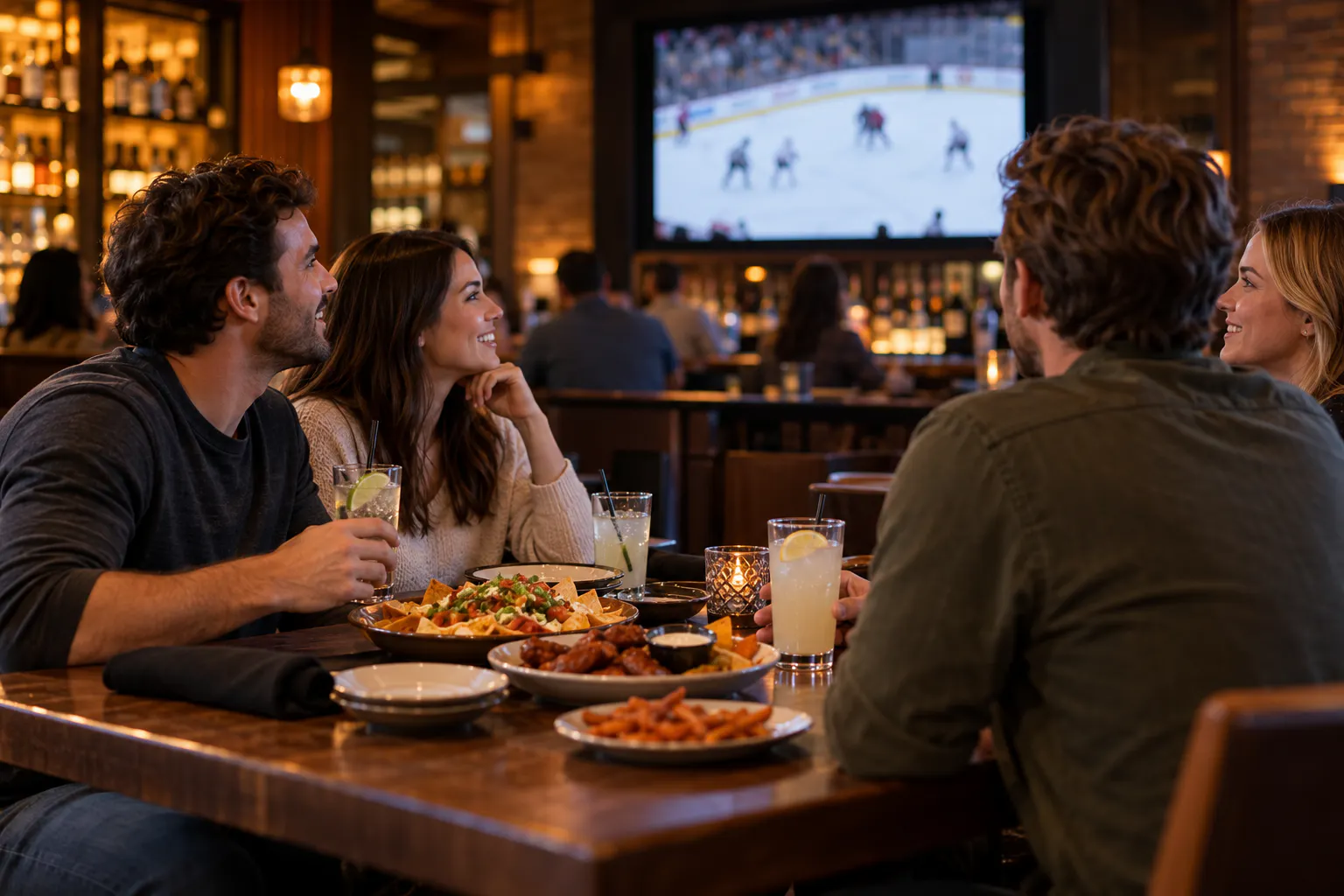
A neighborhood room can shift the group from arena intensity back to conversation. The point is not to make the evening complicated; it is to decide the few details that prevent confusion later.
- Review the game: Let everyone compare moments without competing with another production.
- Late appetite: Check the current menu and kitchen availability.
- Optional activity: A short shuffleboard game can change the pace for interested guests.
- Quiet exit: Let tired people leave while others finish the visit.
These four checks work together rather than as separate rules. Review the game establishes the baseline, Late appetite adds context, Optional activity prevents an avoidable assumption, and Quiet exit keeps the plan practical. If one check fails, revise the plan before moving on.
Keep hockey references accurate and neutral
Useful planning does not require team marks, invented sponsorship, or guaranteed programming. The point is not to make the evening complicated; it is to decide the few details that prevent confusion later.
- Official sources: Use league, arena, and ticket pages for date and policy details.
- No affiliation claim: Describe location and timing without implying a partnership.
- No schedule promise: Contact the bar about a desired broadcast.
- Season-long value: The same planning framework works for many games, but each date still needs verification.
A useful way to remember keep hockey references accurate and neutral is to ask four short questions: What does official sources tell us? How does no affiliation claim change the choice? Has no schedule promise been confirmed? Does season-long value still fit the evening? Clear answers are more valuable than a rushed decision.
Putting the plan into practice at Starboard Tack
For “before or after a hockey game a quieter off strip food and drinks plan,” the local reference point is Starboard Tack at 2601 Atlantic St. in East Las Vegas. The official site describes food, rum and cocktails, bar-top video poker, deck shuffleboard, and events. Use only the parts relevant to this article, then match them to the current menu, hours, activity details, and the needs of the actual group.
Before using this sports viewing and dining plan, share the destination and identify the one fact that still needs confirmation for commercial investigation / seasonal planning. Leave room for a late arrival, changed appetite, occupied activity area, or quieter pace. That flexibility is what makes the advice in “Before or After a Hockey Game: A Quieter Off-Strip Food-and-Drinks Plan” usable outside a spreadsheet.
As a final check, explain the plan in one sentence without relying on the phrase “food and drinks before hockey game Las Vegas.” If the sentence still tells the group what to expect, when to arrive, and what must be verified, the plan is probably specific enough to use. If it turns into a claim about being the best, winning, guaranteed availability, or a temporary special, return to the official pages and revise it.
The responsible close for sports viewing and dining is simple: adults who drink or play video poker should set limits first, include food and water, and arrange safe transportation. Gambling remains entertainment rather than a way to guarantee income or recover losses. When the preset money, time, attention, or transportation limit for “Before or After a Hockey Game: A Quieter Off-Strip Food-and-Drinks Plan” is reached, stop.