
Shuffleboard Rules for Beginners: How to Play a Friendly Bar Match

At Starboard Tack, shuffleboard means an indoor deck game: a cue, large discs, and a scoring triangle on the floor. It is not the tabletop game where players slide small weights toward the far edge. Knowing that difference before you arrive makes the equipment, scoring, and space around the court much easier to understand.
This beginner guide is for an easygoing match with friends, not a tournament rulebook. Starboard Tack's indoor deck shuffleboard page is the place to check the venue's current playing information. Ask staff about availability, the session format, and any house rules before starting; do not assume that a format used at another bar applies here.
First, get comfortable with the court
Deck shuffleboard uses a long-handled cue to push discs along the floor toward a marked scoring area. A standard set has eight discs divided between two colors, four per side. Singles means two opponents; doubles means two teams of two. These are the basic equipment and game distinctions described by the USA National Shuffleboard Association.
Before anyone takes a shot, have the group identify the playing lane, starting area, scoring area, and safe waiting space. Ask where unused cues belong and where players should stand between turns. A beginner should not have to guess whether a nearby walkway is part of the court. Keep bags and drinks out of the playing area, and let staff handle any surface treatment or equipment concern.
Take a moment to look from the shooting position toward the target. The court looks different from that perspective than it does from a seat beside it. Notice how much space there is around the scoring areas. You are learning distance and direction, not trying to win the opening practice shot.
Understand the scoring before keeping score
In standard deck play, the positive areas are worth 10, 8, or 7 points; the kitchen, also called 10-off, subtracts ten. A disc must finish completely inside a scoring area without touching its boundary lines. Both sides count their qualifying discs: an opponent's matching score does not cancel yours. Count only after all eight discs have been played and stopped.
Those fundamentals are documented in the New York Shuffleboard Association's deck rules. They explain the game, not Starboard Tack's house policy. Have staff show you the relevant markings and explain close calls before you begin. Tournament penalties and match procedures can differ from a casual session.
For a simple arithmetic example, imagine your color finishes with one legal eight and one legal seven, while your opponent has one legal ten. Your frame adds fifteen and theirs adds ten. Now imagine that you also have a disc fully in ten-off: your frame becomes five. That is why a shot that looks close to a scoring area is not necessarily helping your total.
Leave the discs where they finish until both sides agree on the count. A phone note or a simple scorecard can track separate columns for each side. Read the totals aloud before clearing the court. Fixing an arithmetic mistake immediately is much easier than reconstructing several frames from memory.
Agree on a manageable first match
A group learning together benefits from a clear stopping point. Ask staff which match format suits the session you have booked. Then agree on how long you will practice, how the official turns will work, and how you will decide a tie. If you are sharing a limited time slot, avoid starting a format that everyone knows cannot fit.
For a casual practice game, a short, agreed number of frames can be easier to manage than an open-ended challenge. Make sure each side gets a fair opportunity under the chosen order. This is a planning suggestion, not a claim about the venue's rules. An organized event may require a specific format, and that takes priority over an improvised one.
Expect the sides to alternate discs within a frame. The last shot, often called the hammer, can affect the final positions, so the starting order matters. Ask how the lead changes between frames instead of importing a tabletop rule about the previous winner. With doubles, confirm partner positions and responsibilities before anyone moves to the other end.
Use practice to learn pace, not power
If a practice opportunity is available, use it deliberately. Pick a clear area to aim for and watch where the disc actually stops. On the next attempt, adjust the strength of the push a little while keeping the direction similar. Changing your stance, aim, and force all at once makes it difficult to know what helped.
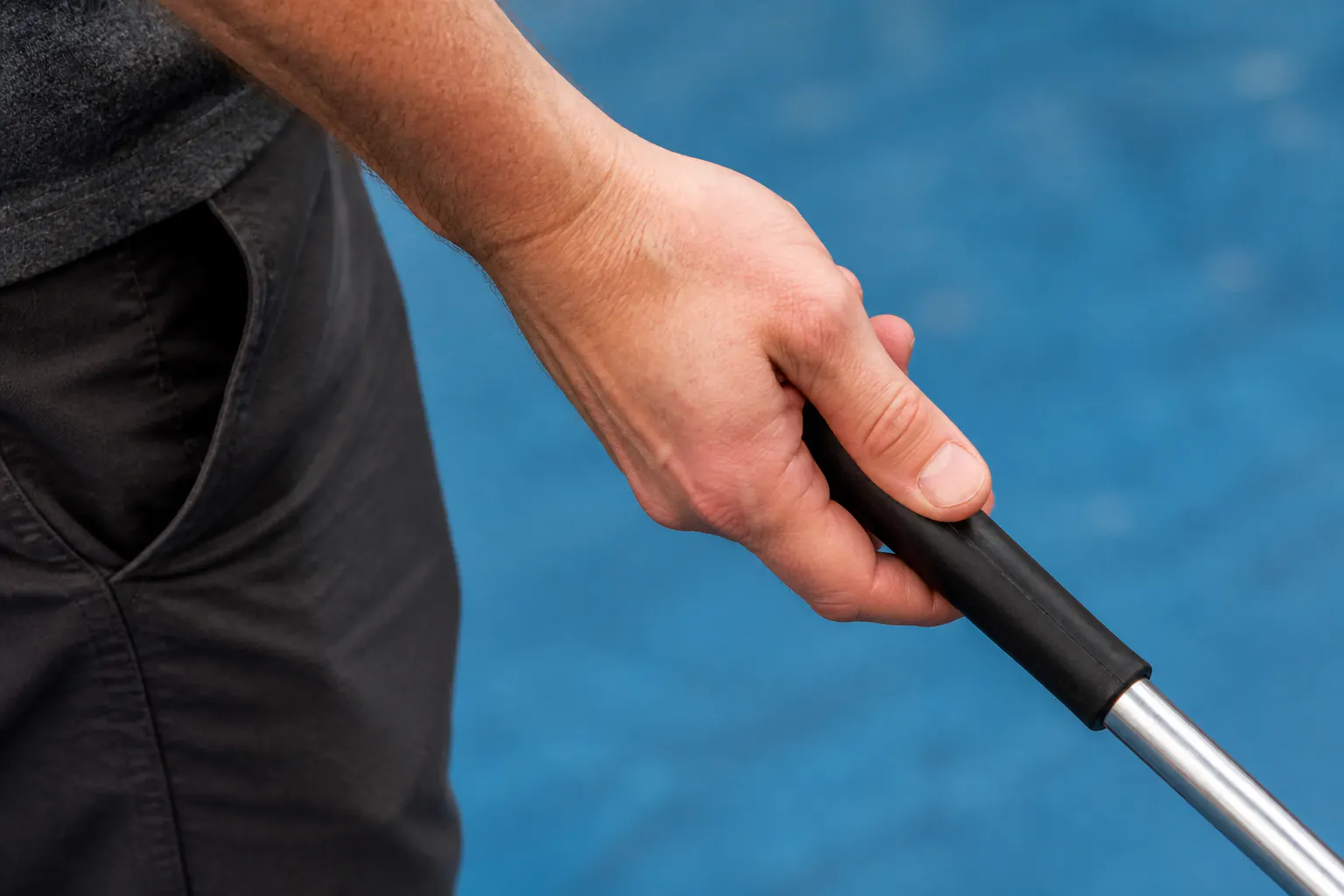
Ask staff to demonstrate the cue if you have not used one before. Start with a comfortable stance and a controlled forward movement. The cue is there to guide a push; there is no need for a dramatic swing. Wait until the lane is clear and the previous disc has stopped before setting up your turn.
It helps to describe the result plainly: short, long, left, or right. A shot that finishes short of your chosen target gives you useful information even when it scores nothing. Beginners often improve more by repeating a calm motion than by searching for a clever new technique after every miss.
Give each shot one purpose
Once you can send a disc toward a chosen area, decide what you want the next shot to accomplish. An open scoring attempt is the simplest choice. A defensive attempt might make an opponent's next approach less comfortable. A clearing attempt tries to change an existing position. None is automatically right; the useful question is which result you can realistically control.
Do not feel obliged to attempt a complicated collision just because another player makes one look easy. Consider the space around the intended contact and where both discs could travel afterward. If your confidence is low, an uncomplicated attempt at open scoring space may teach you more than a forceful shot with an unpredictable finish.
During a practice session, compare the intention with the outcome after the frame: did the shot do what you expected, and what would you change next time? Keep that conversation brief and encouraging. During a formal game, follow the event's rules on coaching rather than assuming teammates or spectators may give advice.
Keep the pace friendly and the space clear
Good court etiquette is mostly about attention. Be ready when your turn comes, give the shooter room, and avoid crossing the lane to retrieve something during play. Keep the cue under control while talking; other guests should not have to dodge equipment. If a disc or cue looks damaged, stop and ask staff rather than trying to repair it yourself.
A close call does not need to become the story of the night. Pause, leave the disc untouched, and ask for help if the group cannot agree. Decide unfamiliar rules before the next shot whenever possible. A beginner should be able to ask a question without feeling that the match has become an argument.
For mixed-experience groups, make the first round a chance to learn names, turns, and scoring. Save the more competitive rematch for later if everyone wants it. Someone who prefers watching can still enjoy the gathering without being pressured to play. The aim is a shared evening, not making every guest care equally about the scoreboard.
Build the rest of the visit around the game
Starboard Tack is at 2601 Atlantic St. in East Las Vegas. Before gathering friends, use the contact and location details to confirm any access needs, group arrangements, or timing questions. Being able to reach the bar does not itself confirm that a court is available at your preferred time.
For friends who have not visited, the guide to Starboard Tack's neighborhood atmosphere and shuffleboard offers broader context. Send that overview along with the meeting time so the invitation feels like a plan for the whole group, not just the most enthusiastic player.
If the group plans to eat, share the current food and drink menus in advance. Decide whether you want food before play or a break afterward, and ask where drinks may be kept near the court. That small conversation helps the session feel relaxed instead of interrupting turns whenever an order arrives.
Check the events page for current programming rather than assuming that a league or tournament runs on a particular night. Choose a visit that fits your group, learn the deck-game basics, and let staff clarify the house details. A clear starting plan leaves more room for a friendly match, a good conversation, and a rematch worth looking forward to.