
Rice Plates for Different Appetites: Fried Rice, Adobo, and Loco Moco

Rice appears in several distinct Starboard Tack entrees, but it does a different job in each one. Fried Chicken Fried Rice and Kimchi Fried Rice put the rice itself at the center. The Adobo Plate pairs pork adobo with rice. Loco Moco builds a layered plate with red miso gravy, grilled chuck, grilled onions, rice, and an over-easy egg. If you want a rice-based meal, choosing by the word “rice” alone misses the most useful differences.
The live entree menu supplies these names and components. It does not provide portion weights, exact spice levels, all sauce ingredients, or a full dietary breakdown. This guide uses the listed build to help you choose a meal format. Ask staff about current availability, ingredients, and preparation when a detail matters.
Decide whether rice is the dish or the base
In fried rice, the grains are mixed into the main flavor and texture. Every forkful can contain bits of the other listed ingredients. In the Adobo Plate, rice acts as a base beside or beneath a named pork preparation. In Loco Moco, rice supports beef, onion, egg, and gravy. These are different ways to answer hunger. A person who wants one integrated dish may start with fried rice; a person who wants distinct layers may prefer adobo or Loco Moco.
“Different appetites” does not mean one plate is guaranteed smaller or lighter. The public menu does not provide enough information to make that ranking. It means different cravings: vegetables and kimchi, fried chicken and egg, pork adobo, or grilled chuck with gravy. Choose what sounds satisfying, then ask about the current portion if quantity will decide the order.
This distinction also helps when ordering for more than one person. Two rice dishes can sound repetitive on paper but provide very different tastes. Before sharing, check whether the diners want a common plate or their own full meal. Rice is familiar; the toppings, sauces, and format are where preferences diverge.
Fried Chicken Fried Rice: a composed meal
Starboard Tack lists Fried Chicken Fried Rice with a sunny-side-up egg. That makes it a more specific choice than plain fried rice on the side of another dish. The name points to chicken, rice, and egg as the core of the meal. If you want a single bowl or plate with familiar savory elements and an egg finish, this is the direct route.
The menu does not spell out every vegetable, seasoning, or cooking detail for this entree. Do not rely on an illustrative photo to determine what will be mixed into the rice. If you need to avoid an ingredient, ask the kitchen. The egg is explicitly listed, so a guest who avoids eggs should ask whether the dish can be adjusted rather than assuming it can be left off without other changes.
Consider the texture you want. Fried chicken suggests a contrast between the chicken preparation and the rice, while the egg may add another layer. How much of that contrast remains on the plate is a matter of actual service. If your priority is a pork-and-rice dish instead, the Adobo Plate gives a clearer path. If a gravy-and-beef plate appeals more, look at Loco Moco.
Kimchi Fried Rice: read the listed vegetables
The Kimchi Fried Rice description names mushrooms, peas, and carrots, with an egg addition listed separately. This is a different fried-rice direction from the Fried Chicken version. Kimchi is in the item name, so a guest can reasonably expect a tangy, savory accent; the exact heat and balance should be confirmed. The listed vegetables add more clues about the plate than the broad phrase “fried rice” does.
An optional egg can change the meal without changing its basic identity. If you want one, check the current menu and tell staff. If you do not, avoid assuming that skipping the added egg makes the dish vegan or suitable for an allergy. The public menu does not provide a full ingredient or shared-equipment statement. Ask directly when a dietary rule is strict.
Kimchi Fried Rice may suit someone who wants a rice-centered entree with a stronger fermented or tangy note than the Fried Chicken version. It may not suit someone who dislikes kimchi or needs a precise spice rating. The useful comparison is the actual named components, not an unsupported claim that one dish is inherently more adventurous or healthier.
Adobo Plate: pork and rice with a clear focus
The Adobo Plate listing is concise: pork adobo and rice. That makes the decision straightforward if pork adobo is the flavor you came for. Rice provides a base for the pork rather than competing as a second named preparation. The menu does not publish the adobo recipe, so do not assume a particular sourness, sweetness, cut of pork, or cooking time from another kitchen’s version.
When a menu description is short, a guest may want one extra question before ordering. Ask how the plate is served today or whether a particular ingredient is present. That is especially worthwhile if you have a soy, vinegar, garlic, or other recipe-related concern; none of those should be inferred from a generic understanding of adobo. The restaurant’s current preparation is the relevant one.
Compared with the fried-rice choices, the Adobo Plate may appeal when you want a named main with rice alongside it. If you are also ordering a starter from the pupus menu, consider whether it brings contrast. Another pork-focused plate might be welcome, or you might prefer a vegetable or seafood opening.
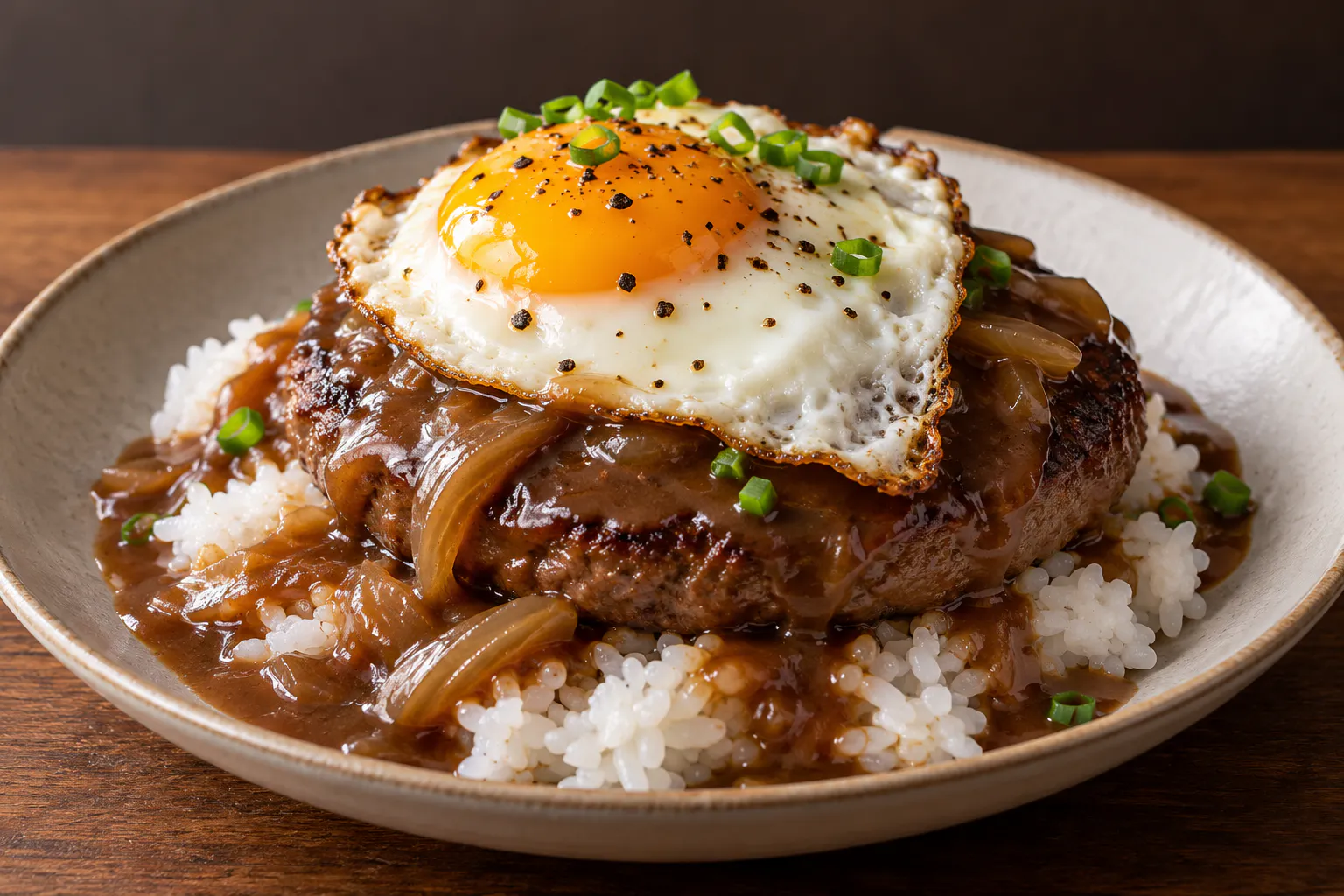
Loco Moco: rice beneath a layered entree
The Loco Moco is the most detailed rice-plate build in this comparison: red miso gravy, grilled chuck, grilled onions, rice, and an over-easy egg. These elements make the rice a foundation for a layered savory meal. Someone who wants beef, gravy, and egg together may find it the clearest match. Someone who wants the rice itself to carry the meal may prefer one of the fried-rice entries.
The current menu also says a vegan style is available. That is useful, but the public listing does not describe the vegan-style components or handling. Ask how it is prepared and whether it meets a specific restriction. Do not assume the same egg, gravy, or protein applies to that version. The named standard build and the available variation are distinct questions.
“Red miso gravy” is a specific menu phrase, not a promise of how salty or intense the finished plate will taste. If you have not tried it, ask staff for a current description. The same goes for portion size and egg preparation adjustments. A short conversation can tell you more than a generic photograph of Loco Moco, which may use a different gravy entirely.
Build the rest of the meal around the entree
Rice plates already have a base, so a separate starch may be unnecessary unless you want it. A table sharing starters before rice entrees might choose a crisp vegetable or seafood option for contrast. The full menu makes those possibilities visible, but you do not need to sample every category in one visit. Order for the appetite you have, not for an imagined ideal spread.
For a group, let each person identify the important element: chicken, kimchi and vegetables, pork adobo, or beef and gravy. That is a faster route to agreement than asking, “Who wants rice?” If two guests plan to share, ask about portions and any ingredient restrictions. A dish that is right for one person may be wrong for another because of egg, pork, beef, kimchi, mushrooms, or sauce components.
If you want a different format, the sandwich section and dessert section help you plan the rest of the visit. One person can have a rice entree while another chooses a sandwich. A shared sweet finish can wait until you know how filling the main plates were.
A quick way to choose your rice meal
Egg is one small detail that can clarify the decision. The Fried Chicken Fried Rice lists a sunny-side-up egg; the standard Loco Moco lists an over-easy egg; Kimchi Fried Rice offers an egg addition; the Adobo Plate's short public description does not name one. If egg is the part of a rice meal you especially enjoy, that distinction matters. If you avoid eggs, the same distinction is a reason to ask about the full recipe and kitchen handling rather than simply removing a visible topping. Menu descriptions help narrow a choice, but they are not complete allergen records.
Choose Fried Chicken Fried Rice for the chicken-and-egg fried-rice format. Choose Kimchi Fried Rice for the rice-centered combination of kimchi, mushrooms, peas, and carrots, with an optional egg question. Choose the Adobo Plate when pork adobo with rice is the central craving. Choose Loco Moco when grilled chuck, onions, red miso gravy, rice, and an over-easy egg sound like the meal you want. The same grain supports four different experiences.
Before ordering, check the live menu and ask about any ingredient, heat, portion, or vegan-style detail that affects your choice. That keeps the decision grounded in Starboard Tack’s current food rather than a generic idea of what a rice plate should be.