
Kimchi Reuben or Sando Melt? Two Sandwiches with Different Flavor Paths

Two of Starboard Tack’s sandwiches begin with beef and Swiss cheese, then head in different directions. The Kimchi Rueben, spelled that way on the current menu, combines corned beef, kimchi, gochujang, Thousand Island, Swiss, and toasted rye. The Starboard Sando Melt uses ground chuck, sautéed onions and mushrooms, Swiss, housemade katsu sauce, and Texas toast. Both are substantial sandwich ideas, but the ingredient lists point to different tastes and textures. One layers tang, spice, and a deli-style base; the other leans toward browned beef, cooked vegetables, and a thick toasted-bread format.
This comparison follows the restaurant’s current sandwich menu. The menu says sandwiches are served with fries. It does not promise a particular portion, spice level, cooking preference, or substitution, so check directly if one of those details matters to you.
Begin with the beef, not the name
Corned beef gives the Kimchi Rueben its familiar deli anchor. A guest who orders a Reuben expecting sliced, seasoned beef will recognize that starting point, even though the rest of the sandwich adds Starboard Tack’s own direction. The Sando Melt uses ground chuck instead. That changes the shape of the bite: rather than layers of sliced meat, it is a beef-and-toast construction with onions, mushrooms, cheese, and sauce gathered around it.
Neither choice is automatically lighter or larger. Those words require actual portion information, which the public description does not give. What can be said from the menu is that the proteins organize the sandwiches differently. Corned beef makes the Rueben a variation on a known deli combination. Ground chuck makes the Sando Melt closer to a grilled, savory comfort sandwich. If you already know which kind of beef you want, much of the decision is made.
When dining with someone else, consider ordering one of each for a comparison only if both people enjoy the named ingredients. Splitting a sandwich is less fun when one guest dislikes kimchi or mushrooms. The two item descriptions make that preference check easy before the order goes in.
The Kimchi Rueben’s sharper flavor route
The restaurant lists kimchi, gochujang, and Thousand Island with the corned beef and Swiss. That combination suggests several layers rather than a single “spicy sandwich” note. Kimchi can contribute tang and fermentation character; gochujang can bring sweet-savory chile depth; Thousand Island adds a familiar creamy dressing element. Their exact balance is a kitchen decision, not something a menu line can quantify. Ask about heat if you are cautious with chile.
Toasted rye is another important signal. Bread is not merely the handle for the filling. Rye’s own flavor helps a deli-style sandwich feel distinct from a neutral bun. It also contrasts with the richness of beef, dressing, and cheese. Someone who wants the recognizable Reuben framework with a different accent will likely be drawn to this option. Someone who dislikes tangy or fermented flavors might choose the Sando Melt instead.
Do not assume every ingredient can be removed without changing how the sandwich works. If a restriction requires a substitution, ask staff what the kitchen can do. The public menu confirms the listed build; it does not establish a custom-build policy or allergen-safe preparation.
The Sando Melt’s cooked, savory route
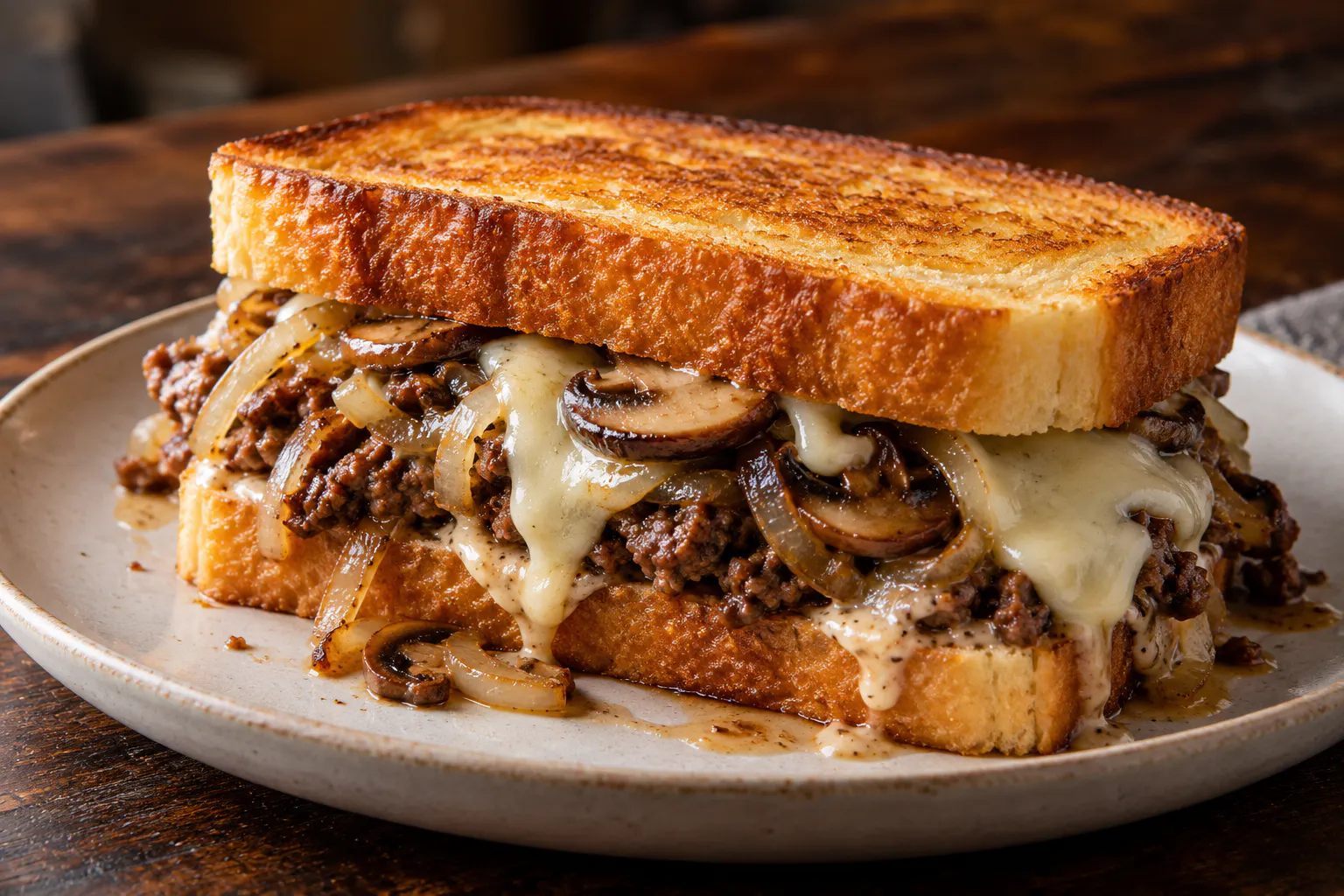
The Sando Melt’s ingredient list is organized around ground chuck, sautéed onions, sautéed mushrooms, Swiss, katsu sauce, and Texas toast. This is a more cooked-vegetable and toasted-bread flavor path than the Rueben. Onions and mushrooms add depth and softness to the beef. Swiss connects both sandwiches but plays a different role when surrounded by sautéed ingredients rather than kimchi and dressing.
Housemade katsu sauce is a distinctive named component. The word points toward a sweet-savory sauce tradition, but the restaurant’s own recipe is not published in the sandwich description. Do not assume a precise sweetness, heat, or ingredient list. If you have an allergy or strong sauce preference, ask. The sauce is part of what makes this a Sando Melt rather than a generic patty melt, so it deserves attention in the choice.
Texas toast implies a thick toasted-bread experience, contrasting with the Kimchi Rueben’s rye. If you enjoy a sandwich whose bread and filling feel equally substantial, this may be the more appealing format. Again, that is a texture expectation from the listed build, not a claim about an exact size or cooking result on every visit.
Which sandwich fits your appetite?
Both sandwiches come from a menu section that says fries are included. That is helpful when planning the meal. You may not need a separate side merely to make the order feel complete. If you want a starter, consider whether you are genuinely hungry enough for both. The pupus menu has several openings, but an appetizer plus a beef-and-cheese sandwich plus fries is a different meal from the sandwich alone.
The Kimchi Rueben may appeal when you want a more contrast-driven bite: salty beef, tangy kimchi, sauce, cheese, and rye. The Sando Melt may appeal when you want the unified warmth of ground chuck, sautéed vegetables, katsu sauce, and thick toast. These descriptions are about flavor direction, not calorie counts or nutritional ranking. Choose based on what sounds enjoyable, not on an unsupported “healthy” label.
If you are ordering for someone else, ask them about kimchi, mushrooms, and sauces before choosing. Those are defining ingredients, not minor garnishes. A friend who wants a classic cheeseburger might prefer another listed option on the full menu rather than either of these more specific sandwiches.
How the bread and sauce change each bite
Imagine the sandwiches without their bread or sauce, and they become much less distinct. Corned beef and Swiss could be a straightforward deli order; rye, kimchi, gochujang, and Thousand Island turn it into the menu’s particular Rueben. Ground chuck, onions, and mushrooms could be a simple hot sandwich; Texas toast and housemade katsu sauce make the Sando Melt its own item. That is why reading the complete menu line is more useful than choosing by protein alone.
The two breads also suggest different ways of eating. Toasted rye frames layered fillings in slices. Texas toast provides a thicker surface for a warm, messy melt. The kitchen’s actual assembly may change how neat each sandwich is, so do not promise a clean handheld meal. If you are planning food before an activity, allow time and napkins rather than assuming either can be eaten in a hurry.
For a contrasting second course, the dessert menu lists options that move away from beef, cheese, and fries. You need not decide on dessert now, but leaving room for it can help you avoid over-ordering starters.
Questions worth asking before you order
Start with the issues the menu cannot settle. How hot is the current Kimchi Rueben? What is in the housemade katsu sauce? Are substitutions available for a specific ingredient? Can the kitchen address a food allergy or cross-contact concern? The answer to any of these can change the best choice for a particular guest. The menu provides a strong flavor outline, not a complete safety or customization sheet.
If you care about the current availability of an item, check the live listing before traveling for it. A screenshot or older article can outlive a menu change. The entree menu offers a different format if neither sandwich fits your mood. There is no reason to force a choice between two sandwiches when you would rather have a plate.
When a table is split, ordering different sandwiches can be useful. Taste your own first, then share a small portion only if both guests want to. That keeps the comparison enjoyable instead of turning dinner into a debate about which item is objectively best.
A simple way to choose
Another useful test is to imagine the first bite without the sandwich name. If the combination of corned beef, kimchi, rye, and dressing makes you curious, the Rueben is the honest choice even if you usually order melts. If onions, mushrooms, ground chuck, and katsu sauce sound comforting, the Sando Melt is the stronger match even if a Reuben is more familiar. Names can carry expectations from other restaurants; the ingredient list is the clearest description of this kitchen's version. Let it guide you before asking for changes to a sandwich whose character depends on those components.
Choose the Kimchi Rueben for corned beef, rye, kimchi, gochujang, and Thousand Island: a deli-style base with tangy, layered accents. Choose the Starboard Sando Melt for ground chuck, sautéed onions and mushrooms, Swiss, katsu sauce, and Texas toast: a warm, savory, toast-forward route. The current menu describes both clearly enough to make an initial decision, while leaving exact heat, portions, and ingredient questions for staff.
Whichever you choose, treat the included fries as part of the meal plan, check the live menu for changes, and order the sandwich whose defining ingredients you actually want. A good sandwich choice starts with the entire build, not just the name at the top of the line.