
How to Order Food for a Group at a Neighborhood Bar: A Shareable-Plate Plan

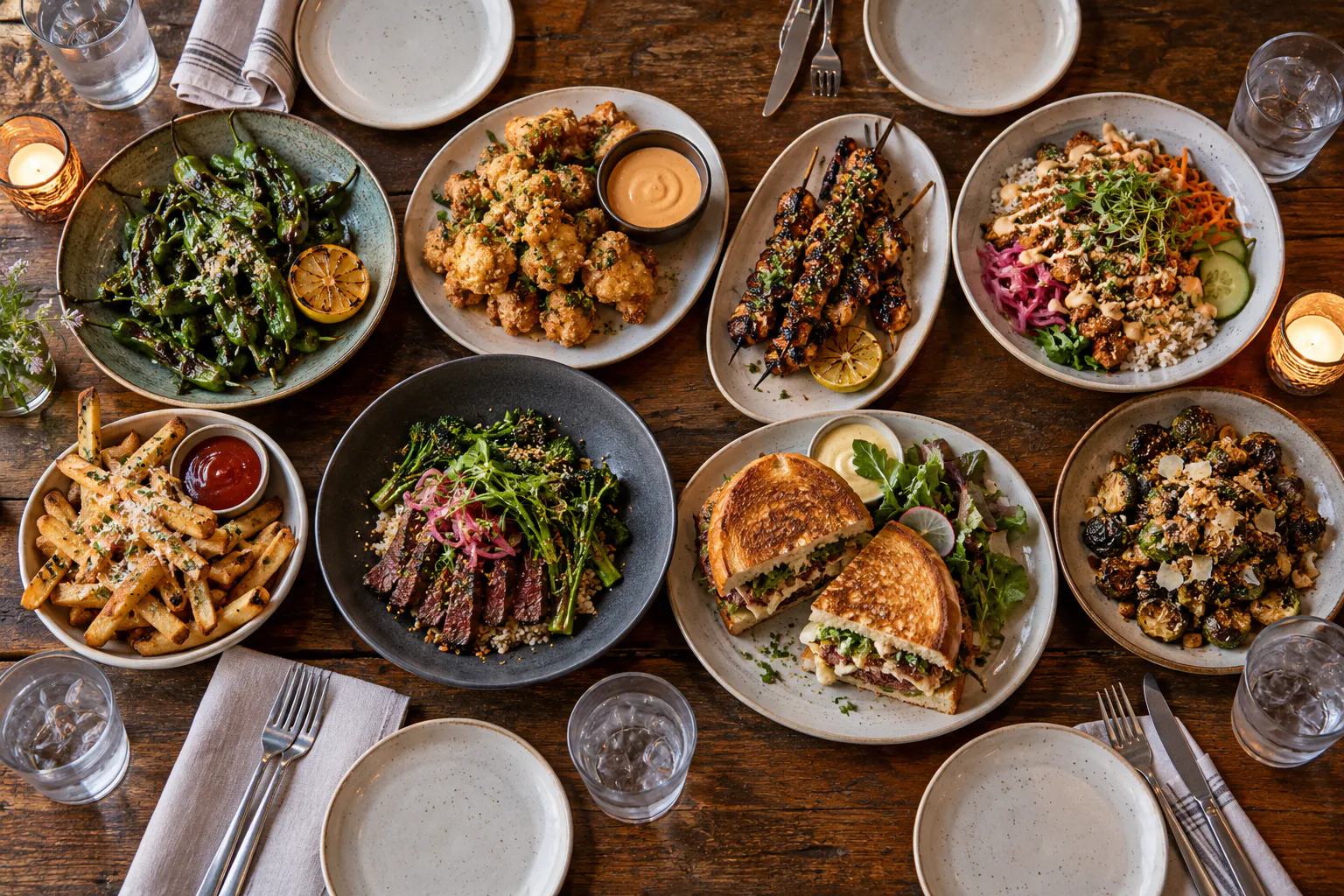
Ordering for a group at a neighborhood bar works best when the table separates three jobs: give early arrivals something to share, make sure each person can build a real meal, and keep later orders from disrupting the evening. The plan does not require everyone to eat the same thing; it requires a clear sequence and a quick check for dietary needs.
For article 7 in this campaign, the reader’s job is to make a practical choice for an adult visit in or near East Las Vegas. This article does not promise a game result, advertise a temporary promotion, or guarantee a particular item, machine, broadcast, or event. Use the linked first-party pages when a current detail will determine the plan.
Count appetites, not just people
A head count cannot reveal who skipped lunch, who already ate, or who wants only a snack. The point is not to make the evening complicated; it is to decide the few details that prevent confusion later.
- Arrival question: Ask whether guests are hungry now or joining later.
- Meal level: Separate full-meal diners from light eaters.
- Budget comfort: Avoid assuming everyone wants to split every item evenly.
- Timing: Identify anyone who must leave early.
The order matters: start with arrival question, use meal level to narrow the choice, verify budget comfort in the real setting, and keep timing as the final guardrail. That sequence turns count appetites, not just people into a decision the whole group can understand.
While working through “Count appetites, not just people,” use Starboard Tack’s current food and drink menus as the first-party checkpoint. That page helps verify the part of this specific decision that can change instead of leaving the group dependent on an old search result.
Start with one or two genuinely shareable plates
The first order should reduce hunger without replacing everyone’s individual choice. The point is not to make the evening complicated; it is to decide the few details that prevent confusion later.
- Easy portions: Choose items that can be divided without complicated cutting or messy transfer.
- Different flavor: Pair contrasting options rather than duplicating one profile.
- Table space: Leave room for drinks and later entrees.
- Refill logic: Wait to see actual demand before doubling the opening order.
These four checks work together rather than as separate rules. Easy portions establishes the baseline, Different flavor adds context, Table space prevents an avoidable assumption, and Refill logic keeps the plan practical. If one check fails, revise the plan before moving on.
While working through “Start with one or two genuinely shareable plates,” use Starboard Tack’s current events page as the first-party checkpoint. That page helps verify the part of this specific decision that can change instead of leaving the group dependent on an old search result.
Create a path to a complete meal
Shared starters are not enough for every guest, especially after work or before a long night. The point is not to make the evening complicated; it is to decide the few details that prevent confusion later.
- Bowls or plates: Let hungry guests choose a composed meal with protein and a base.
- Sandwich route: Useful when a person wants a familiar, self-contained option.
- Sides: Use them to add vegetables, rice, or a preferred texture.
- Current menu: Order from the live categories instead of relying on an old photo.
A useful way to remember create a path to a complete meal is to ask four short questions: What does bowls or plates tell us? How does sandwich route change the choice? Has sides been confirmed? Does current menu still fit the evening? Clear answers are more valuable than a rushed decision.
While working through “Create a path to a complete meal,” use Starboard Tack’s contact and location details as the first-party checkpoint. That page helps verify the part of this specific decision that can change instead of leaving the group dependent on an old search result.
Handle dietary needs directly
A group plan should not force one guest to investigate every shared plate at the table. The point is not to make the evening complicated; it is to decide the few details that prevent confusion later.
- Ask early: Find out whether allergies, intolerances, or strict preferences are present.
- Contact when critical: Speak with the venue before arrival when cross-contact determines safety.
- Separate utensils: Request them when sharing would defeat the restriction.
- No guessing: A familiar dish name does not prove the ingredients or preparation.
The order matters: start with ask early, use contact when critical to narrow the choice, verify separate utensils in the real setting, and keep no guessing as the final guardrail. That sequence turns handle dietary needs directly into a decision the whole group can understand.
While working through “Handle dietary needs directly,” use Starboard Tack’s off-Strip dining guide as the first-party checkpoint. That page helps verify the part of this specific decision that can change instead of leaving the group dependent on an old search result.
Stagger the second wave
A measured follow-up order keeps hot food hot and prevents a crowded table. The point is not to make the evening complicated; it is to decide the few details that prevent confusion later.
- Observe: See which starters actually disappeared.
- Late arrivals: Let them choose rather than ordering a duplicate meal in advance.
- Kitchen pace: Ask staff about timing instead of firing several unnecessary rounds.
- One coordinator: Have one person summarize additions so requests are not repeated.
These four checks work together rather than as separate rules. Observe establishes the baseline, Late arrivals adds context, Kitchen pace prevents an avoidable assumption, and One coordinator keeps the plan practical. If one check fails, revise the plan before moving on.
While working through “Stagger the second wave,” use Starboard Tack’s Starboard Tack story as the first-party checkpoint. That page helps verify the part of this specific decision that can change instead of leaving the group dependent on an old search result.
Split checks without splitting the mood
Payment logistics are easier when expectations are clear before the last ten minutes. The point is not to make the evening complicated; it is to decide the few details that prevent confusion later.
- Individual orders: Separate checks work cleanly when each person’s items are known.
- Shared items: Agree how appetizers will be divided.
- Tip and tax: Include both when calculating transfers.
- Departure order: Let early leavers settle without closing the whole table.
A useful way to remember split checks without splitting the mood is to ask four short questions: What does individual orders tell us? How does shared items change the choice? Has tip and tax been confirmed? Does departure order still fit the evening? Clear answers are more valuable than a rushed decision.
Leave the table ready for the next part of the night
A group meal may lead to shuffleboard, an event, conversation, or the ride home. The point is not to make the evening complicated; it is to decide the few details that prevent confusion later.
- Pack leftovers: Decide who will take shared food rather than abandoning it.
- Clear the lane: Move bags and chairs away from activity areas.
- Hydrate: Add water before another activity or drink.
- Transportation: Confirm that every guest has a safe way home.
The order matters: start with pack leftovers, use clear the lane to narrow the choice, verify hydrate in the real setting, and keep transportation as the final guardrail. That sequence turns leave the table ready for the next part of the night into a decision the whole group can understand.
Putting the plan into practice at Starboard Tack
For “how to order food for a group at a neighborhood bar a shareable plate plan,” the local reference point is Starboard Tack at 2601 Atlantic St. in East Las Vegas. The official site describes food, rum and cocktails, bar-top video poker, deck shuffleboard, and events. Use only the parts relevant to this article, then match them to the current menu, hours, activity details, and the needs of the actual group.
Before using this food and group dining plan, share the destination and identify the one fact that still needs confirmation for commercial investigation. Leave room for a late arrival, changed appetite, occupied activity area, or quieter pace. That flexibility is what makes the advice in “How to Order Food for a Group at a Neighborhood Bar: A Shareable-Plate Plan” usable outside a spreadsheet.
As a final check, explain the plan in one sentence without relying on the phrase “how to order bar food for a group.” If the sentence still tells the group what to expect, when to arrive, and what must be verified, the plan is probably specific enough to use. If it turns into a claim about being the best, winning, guaranteed availability, or a temporary special, return to the official pages and revise it.
The responsible close for food and group dining is simple: adults who drink or play video poker should set limits first, include food and water, and arrange safe transportation. Gambling remains entertainment rather than a way to guarantee income or recover losses. When the preset money, time, attention, or transportation limit for “How to Order Food for a Group at a Neighborhood Bar: A Shareable-Plate Plan” is reached, stop.