
Haddock Two Ways: Fish and Chips or the Reel Big Fish Sandwich?

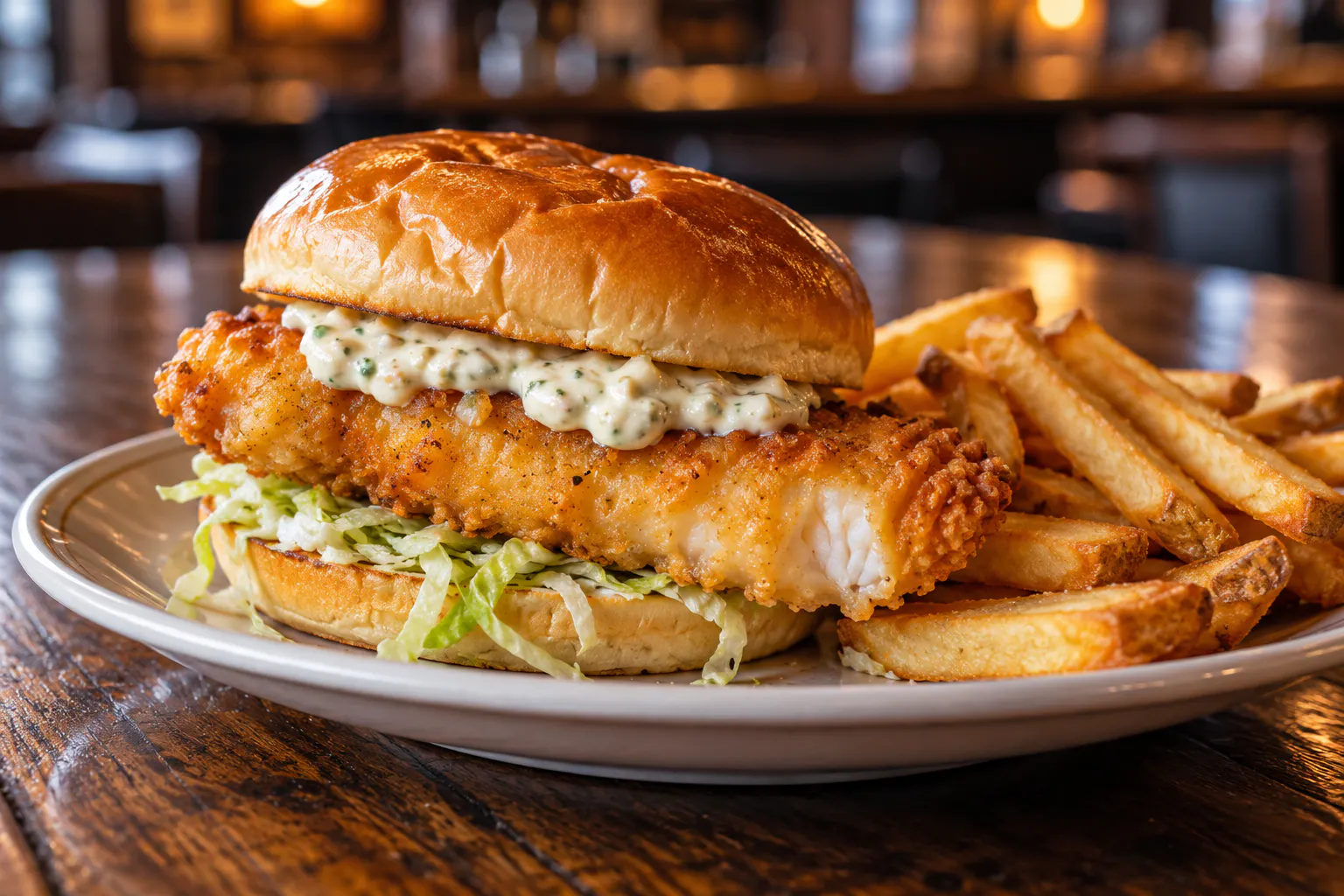
Starboard Tack gives a fish-and-fries decision two different forms. The Fish and Chips entree is listed as crispy haddock with fries and house tartar sauce. The Reel Big Fish sandwich is listed as beer-battered haddock with house tarragon tartar, shredded lettuce, American cheese, and a potato bun; the sandwich section says sandwiches come with fries. The shared fish and side can make the dishes sound nearly identical at first, but the way you eat them and the supporting ingredients create different meals.
Use the current entree menu and sandwich menu for the day-of description. The public pages do not establish portion weights, precise batter ingredients, cooking oil, substitutions, or allergen handling. This guide compares what is actually listed and offers meal-planning questions, not a promise of a particular plate on every visit.
Plate or sandwich is the first decision
The Fish and Chips format puts the haddock on a plate alongside fries and tartar sauce. Each bite can be assembled differently: fish alone, fish with tartar, a fry between bites, or whatever combination you prefer. If you enjoy paying attention to the fish’s crust and texture separately from bread and toppings, a plate makes that easy. It also suits a sit-down meal when you do not need the food to be handheld.
The Reel Big Fish puts the haddock inside a potato bun with lettuce, cheese, and a tarragon tartar. The fish remains central, but every bite is shaped by the bread and supporting ingredients. A sandwich can feel like a complete composed item rather than a plate of parts. It may be the right choice for someone who arrived wanting a sandwich first and fish second.
Both listings include fries through their respective menu descriptions. That means “I want fries” does not settle the comparison. Decide whether you want the fish to stand apart or to be part of a layered sandwich. Then consider the sauces, lettuce, cheese, and bread.
What the menu says about the fish
Both dishes use haddock according to the current menu. That is a meaningful common point: the choice is not between haddock and an unspecified “white fish.” The entree calls its fish crispy; the sandwich calls its fish beer-battered. Those phrases describe the menu’s intended preparation, but they do not reveal a recipe or guarantee an exact crunch after travel or a long wait at the table.
If you care about batter ingredients, ask the kitchen. “Beer-battered” does not by itself answer a gluten, alcohol, or allergy question. Cooking methods and shared equipment also matter. Likewise, “crispy” does not prove the entree has the same or a different batter from the sandwich; the public descriptions simply use different wording. Do not fill the gap with a guess.
Haddock’s role in the two dishes is clear enough for a flavor decision. On the plate it can be the main texture with tartar added as you choose. In the bun it meets lettuce, cheese, sauce, and bread at once. Choose the presentation whose full set of ingredients sounds more satisfying, not the one that seems larger from an illustrative image.
Compare the tartar sauces carefully
The Fish and Chips listing names house tartar sauce. The sandwich names house tarragon tartar. The added word is useful: it signals an herb accent in the sandwich’s sauce. It does not tell you the complete recipe or imply that the entree’s sauce lacks every herb. If the sauce is decisive for you, ask about its current ingredients and whether it is served on the sandwich or can be adjusted.
On a plate, sauce is often easier to control bite by bite. A person who wants a little tartar with some pieces and none with others may prefer the Fish and Chips format. In a sandwich, sauce contributes to the whole build and can connect the fish, lettuce, cheese, and bun. That makes the flavor more integrated but offers less separation. Neither approach is superior; they suit different ways of eating.
Tartar is also an ingredient question for guests with restrictions. The menu name is not an allergen statement. Ask the venue about eggs, dairy, other components, and cross-contact when those details matter. Do not rely on common tartar recipes as a substitute for the restaurant’s current preparation.
What the sandwich adds beyond fish and fries
The Reel Big Fish brings shredded lettuce, American cheese, and a potato bun to the beer-battered haddock. Lettuce can add a fresh, crisp contrast. Cheese can add richness. The bun turns the fish into a handheld meal, with its own soft texture around the crust. These are the exact supporting ingredients named on the current menu, and they explain why the sandwich is not merely Fish and Chips placed between bread.
Someone who dislikes cheese with fish may find the entree the simpler path, or can ask whether the sandwich can be adjusted. Someone who wants the more layered bite may prefer the bun, lettuce, sauce, and cheese together. The public menu does not publish a substitution policy, so make any custom request as a question rather than a plan you assume the kitchen can execute.
The sandwich section says its items are served with fries, so the Reel Big Fish remains a full meal format. If you want to add a starter from the pupus menu, think about appetite first. A fried starter followed by a battered fish sandwich and fries repeats texture as well as adding food. A contrasting starter might be more enjoyable if you are building a longer meal.
Which order fits a shared table?
Fish and Chips can be easy to discuss as a plate: one guest wants a piece of fish, another wants a fry, and the sauce can be approached separately. But do not assume that an entree is meant to feed multiple people. Ask about current portion size if sharing is the plan. Splitting a plate may work for a light meal and fail for two hungry diners.
The Reel Big Fish is a composed sandwich, and splitting it changes the experience. If two people want to taste it, a cut sandwich may be practical, but each part should still carry fish and toppings. Ask the staff if you need it served in a particular way. A table comparing dishes could order one of each, provided both guests like the listed ingredients and have room for two fries portions.
For a group with different appetites, let each person choose their format. The full menu has other sandwiches and entrees; not everyone needs to participate in a fish comparison. This is a decision guide for the person who wants haddock, not a table-wide ordering rule.
Takeout and timing can change the best choice
A crisp fish coating is often most enjoyable soon after service, whether it is plated or inside a bun. If you plan to take the food away or wait before eating, ask how the kitchen packages the order and what will travel best. This article cannot promise a crisp result after an unknown trip. Fries can also change texture in a closed container, so consider the journey before choosing either fish-and-fries format.
At the table, a plate invites a slower meal with fork, sauce, and separate bites. A sandwich may be more convenient when you want one composed item, although a generous fish sandwich can still require a plate and napkins. Do not assume handheld means quick or tidy. Think about the actual visit: are you settling in for dinner, eating before another activity, or bringing food home?
If you want a smaller finish after either dish, the dessert listing can be checked once you know your appetite. There is no need to decide every course before the fish arrives.
A practical final choice
Think about how much of the meal you want to control bite by bite. On the plate, you can taste a piece of fish without tartar, add sauce to the next one, and alternate with fries. In the sandwich, the bun, lettuce, cheese, and tarragon tartar are intended to work together around the fish. That difference can matter more than the fact that both dishes use haddock. If you are unsure, ask how each is currently served and whether the sauce arrives separately. The answer will help you choose the format that matches the way you actually like to eat.
Choose Fish and Chips for crispy haddock, fries, and house tartar in a plate format that lets the fish and sauce stay separate. Choose Reel Big Fish for beer-battered haddock with house tarragon tartar, lettuce, American cheese, and a potato bun, with fries as part of the sandwich section. Both start with haddock; the difference is the eating experience around it.
Check the live menu for availability and ask about batter, sauce, or handling when those details matter. Then order the dish that matches how you want to eat: fish as the main event on a plate, or fish built into a layered sandwich.