
A Smaller Meal at Starboard Tack: Skewers, Chopped Salad, and Starters

Not every visit calls for a full sandwich and fries or a large entree. Starboard Tack’s menu also gives one or two guests a way to build a smaller meal from a skewer, a chopped salad, and a carefully chosen starter. The useful question is not “What is the lightest dish?” The menu does not publish nutrition data, and appetite varies. The useful question is which combination gives you enough food, variety, and flavor without ordering a table’s worth of plates for one person.
The current menu lists beef and pork skewers served with rice and house peanut sauce, a Starboard Chopped salad with a choice of dressings and optional protein additions, and a range of pupus. These descriptions support a flexible ordering plan, but portions and availability should be checked at the restaurant.
Begin with your actual appetite
A smaller meal can mean several different things. One person may want a late bite before heading home. Another may be meeting a friend after already eating. A third may simply want to sample two flavors instead of committing to a single large plate. Decide which situation you are in before ordering. If you are genuinely hungry for dinner, a small starter alone is likely to disappoint. If you only want a snack, adding a salad, skewers, and another pupu could be more than you planned.
A practical first step is to choose one anchor: a skewer with its rice-and-sauce setup, or the chopped salad. Then decide whether a second item adds something missing. A skewer adds a savory grilled direction; the salad adds crisp vegetables and dressing choice. A starter such as lumpia or shrimp cocktail can change the texture again. Build a meal from contrasts rather than from a long list of items that all perform the same role.
Ask about portion size if it will determine the order. The public menu lists one skewer or four skewers, but a photo cannot reliably tell you how much food that will be on a particular visit. Use the staff’s current guidance and your appetite, not a generic idea of what “small plates” must mean.
What the skewer listing makes possible
Starboard Tack lists beef with a sweet Szechuan description and pork with a Filipino BBQ description. The skewer section says they are served with rice and house peanut sauce. That makes the item more than a bare piece of grilled meat. Rice supplies a base, and the sauce provides a distinct flavor element. A guest who wants a compact savory meal can start here without moving directly to a sandwich or entree.
The menu offers one-skewer and four-skewer options. Those choices can fit very different appetites, but do not assume a particular number of people will be satisfied by either. If two guests are comparing flavors, ask whether mixing types is possible and how the current order is served. The public listing does not spell out combination rules. If a peanut allergy matters, the named house peanut sauce makes a direct kitchen conversation essential. Do not infer safe omission or separate preparation from this article.
The beef and pork labels also guide flavor expectations without defining exact heat or sweetness. “Sweet Szechuan” and “Filipino BBQ” are the restaurant’s descriptions. Ask if you need to know the sauce components or intensity. The point is to choose a skewer you want, not to translate the menu into a recipe the kitchen has not published.
The chopped salad as a different anchor
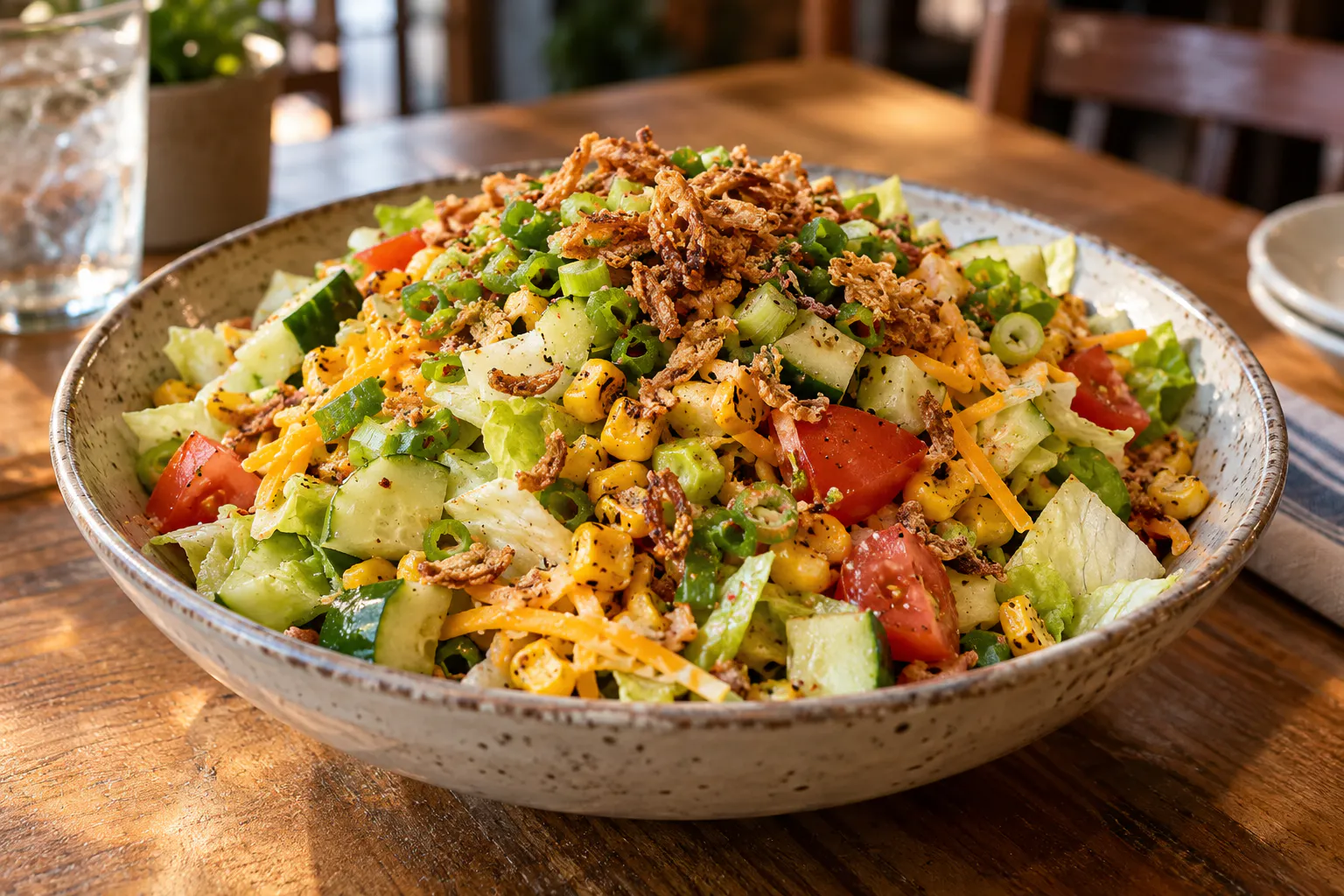
The Starboard Chopped salad is described with iceberg, cucumber, green onion, tomato, cheddar, grilled corn, and fried shallots. The menu offers ranch, blue cheese, or gochujang Thousand Island dressing, and lists pork belly or crispy chicken as optional additions. This is a more specific salad than a generic bowl of greens. It has crisp vegetables, cheese, a grilled element, and a crunchy topping, with several possible dressing directions.
That flexibility matters when you want a smaller meal. Without an added protein, the salad may serve as a fresh counterpoint to a skewer or other starter. With an addition, it may become a more central plate for someone with a bigger appetite. Neither version should be labeled “healthy” or “low calorie” without nutrition data. Choose it because its ingredients and textures sound good, and ask about portions and substitutions if they affect the decision.
The dressing choice changes the plate. Ranch and blue cheese suggest familiar creamy routes; gochujang Thousand Island signals another flavor direction. If the dressing contains an ingredient you avoid, ask before choosing. A salad can be a good way to add contrast to a rich starter, but only when the actual ingredients suit the guest.
Pick a starter that adds, rather than repeats
The pupus list includes several directions. Pork or vegan lumpia with sweet chili sauce brings a crisp roll. Old School Shrimp Cocktail provides a cold seafood route with house cocktail sauce and lemon. Fried Clam Basket or tempura Brussels sprouts move back toward a fried texture. Each could work as a second item, but the best choice depends on what you selected first.
If the anchor is a skewer with rice and peanut sauce, a cool or crisp vegetable-forward second plate may provide more contrast than another meat-and-sauce item. If the anchor is chopped salad, a warm savory starter may make the meal feel complete. You do not need every category represented. The aim is a satisfying order that fits the visit, not a miniature version of the entire menu.
Take dietary details seriously. Vegan lumpia is named vegan, but the public description does not explain every filling or cross-contact practice. Shrimp and clams bring seafood allergens; the peanut sauce is explicitly named in the skewer section. A short conversation with the restaurant is more reliable than treating familiar dish names as a safety guarantee.
Two simple ordering patterns
One pattern is a skewer-centered meal: choose the beef or pork direction, use its rice and sauce as the base, then add one starter only if you want another texture. This is useful when you want warm savory food without a full entree plate. Ask about the portion and sauce before deciding whether a second skewer or a different item is the right addition.
A second pattern is a salad-centered meal: choose the Starboard Chopped, select a dressing, then decide whether to add pork belly or crispy chicken or to pair it with a small warm pupu. That gives you more control over the order’s shape than choosing several starters at once. It also makes it easier to stop when you have enough food rather than continuing because more plates were ordered early.
For two people, each person can choose an anchor and share one starter if both want it. This avoids forcing one guest into a salad when they wanted a hot plate, or treating a shared appetizer as a complete dinner for someone who skipped lunch. If separate checks or dietary needs matter, say so when ordering.
What to skip when the goal is a smaller meal
Skip the assumption that a “small” item is small in every context. Four skewers plus rice, a salad with an addition, and fried pupus could amount to a generous spread. The menu provides choices, not a prescribed package. Add one plate at a time when practical, and let the first plate tell you whether another is needed.
Also skip nutrition claims based on item names. A salad can include cheese, dressing, crispy toppings, and optional pork belly; skewers include rice and peanut sauce. Those are part of why the dishes may be satisfying. If you need nutrition or allergen details, ask the restaurant for current information. This article is about planning a comfortable amount of food, not ranking dishes by calories.
If you know you want a full sandwich, the sandwich menu may be the simpler choice. If you want a sweet finish, leave room and check the dessert list after the savory plates. A smaller meal works best when it reflects the whole visit rather than one isolated order.
Let the first choice guide the rest
Starboard Tack’s menu supports a smaller meal because it offers different formats: an individual skewer choice, a vegetable-and-dressing-forward chopped salad, and pupus with distinct textures and flavors. Start with the format that matches your hunger. Add a contrasting plate if you still want one. Ask about portions, ingredients, and availability instead of inferring them from illustrations or old menu copies.
The result can be a short late bite, a relaxed two-person meal, or a way to taste more than one menu direction without over-ordering. The measure of success is simple: you had the amount of food and variety you wanted, and you still enjoyed the rest of the visit.